


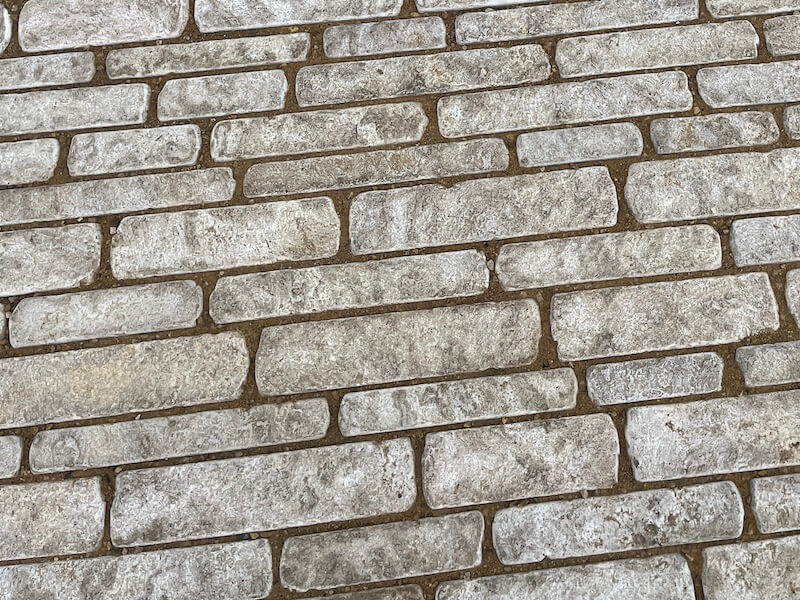
Our slate pavers are designed to be combined to form an elegant Gyō (semi-formal) Japanese pathway, perfect for enhancing traditional Japanese gardens. Each piece comes in a 5cm or 10cm width, with lengths ranging from 11cm to 50cm, giving you the flexibility to create a gently meandering path. The varied dimensions allow the pathway to flow naturally, adding subtle movement and a sense of harmony that reflects the timeless aesthetics of Japanese landscape design.
Japanese Garden Pathways
Pathways, or ‘roji’, are essential elements in Japanese garden design. More than simple walkways, they guide both movement and mindset — inviting visitors to slow down, observe, and connect with nature. The design of a garden path reflects not only aesthetic choices but also cultural and spiritual symbolism, shaping how one experiences the landscape.
In Japanese gardens, the layout of a path often conveys intention. Straight paths are typically found in formal settings, symbolizing directness and order. Curved or meandering paths, however, create a sense of mystery and discovery — revealing views gradually and encouraging contemplation. Zigzag paths, known as ‘yatsuhashi’, are sometimes said to deter evil spirits, as legend holds that the devil can only travel in straight lines. They also slow the walker’s pace, enhancing mindfulness.
Shin-Gyō-Sō is a concept mentioned across Japanese culture and reflects three levels of formality — formal (Shin), semi-formal (Gyō), and informal (Sō) — and is often used to describe Japanese gardens and more specifically pathways.
- Shin (Formal) : Formal paths are precise and symmetrical, using refined materials such as cut stone, granite slabs, or meticulously laid pavers. You’ll find Shin pathways in temple gardens, entry approaches, and spaces meant to convey dignity and structure. Patterns are clean and deliberate, reflecting harmony and order.
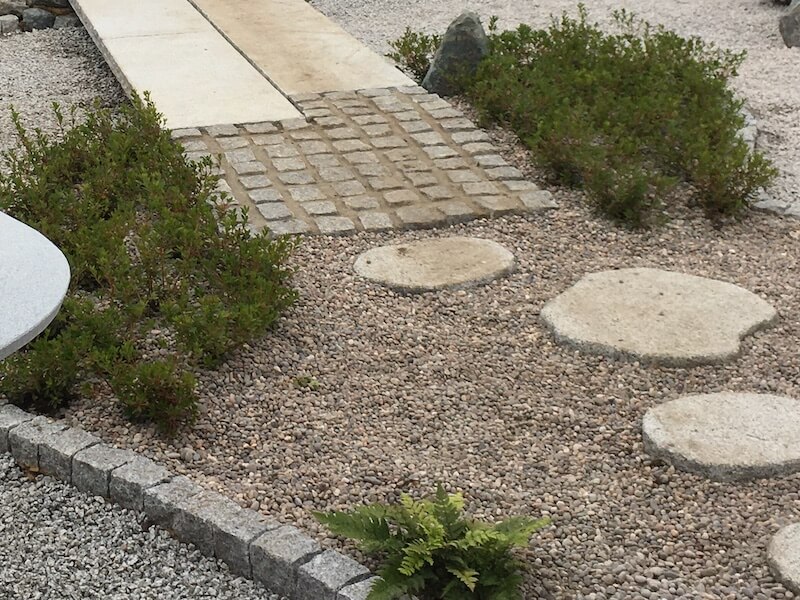
- Gyō (Semi-formal) : Semi-formal paths capture a balance between structure and natural expression. When applied to garden pathways, it embraces subtle irregularity, a meandering form that reflects nature while maintaining an underlying sense of order. Stepping stones (tobi-ishi) may be set in gravel or moss, arranged with subtle irregularity that feels both composed and organic. Gyō pathways are common in tea gardens or transitional areas where the garden moves from the formal to the more natural.
- Sō (Informal) : Informal paths embrace the irregular and rustic, blending seamlessly with their surroundings. Materials like natural rock, or rough-hewn stepping stones create a spontaneous, relaxed feel. Sō pathways are often found in mountain gardens, woodland stroll gardens, or near streams, evoking the simplicity and tranquility of nature itself.
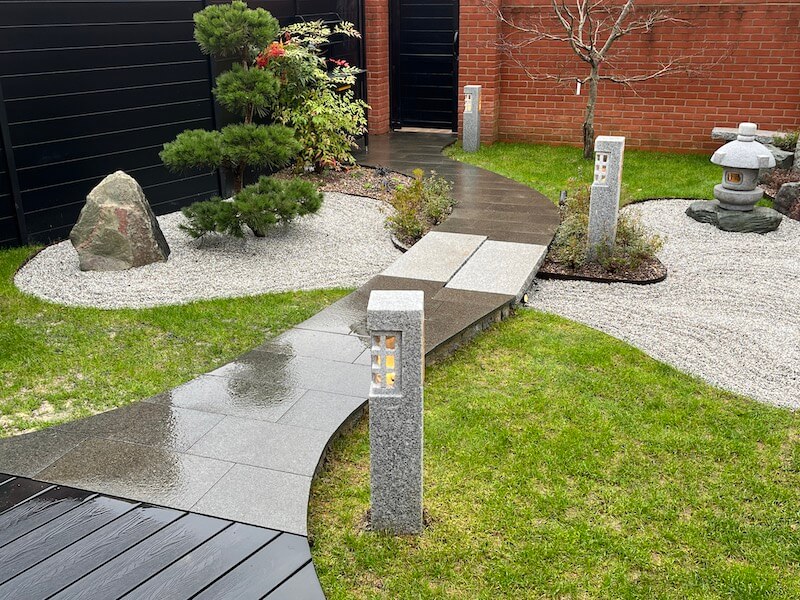
Showcased below are highlights of pathways we have either supplied or designed and installed in our projects.
Stepping Stones
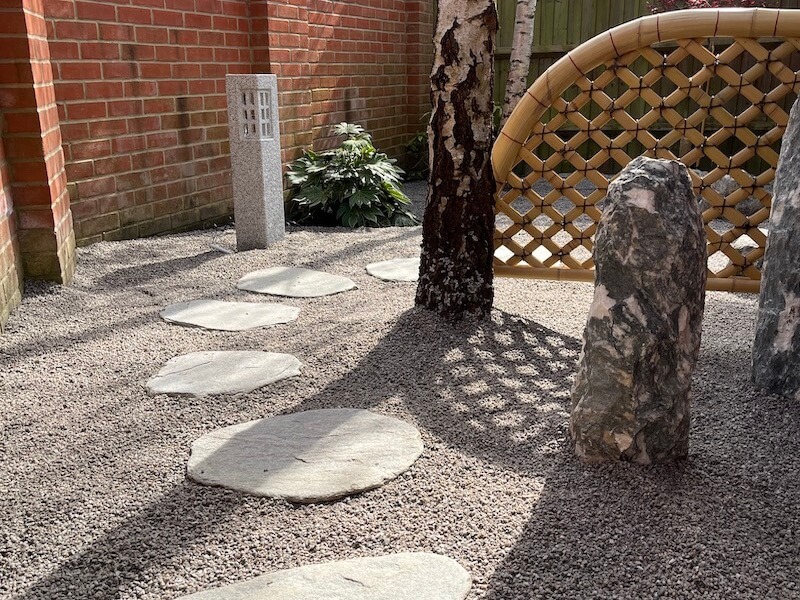
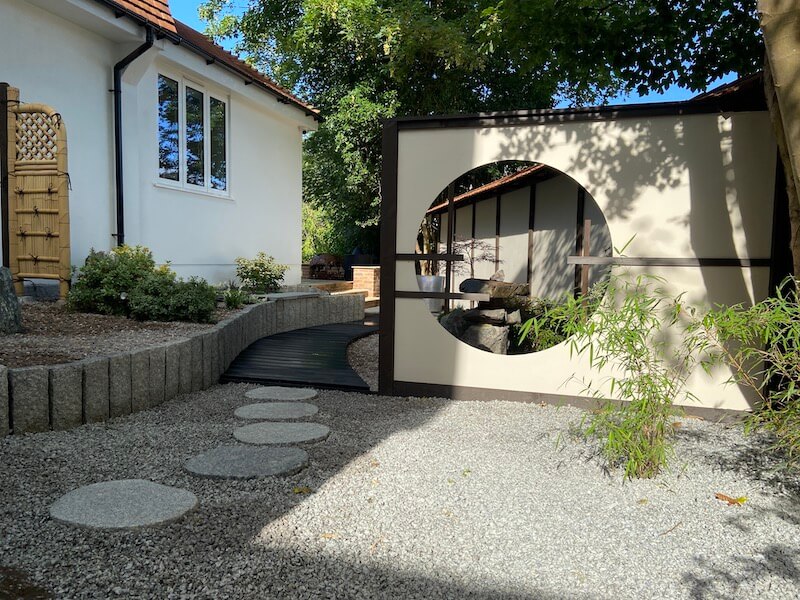
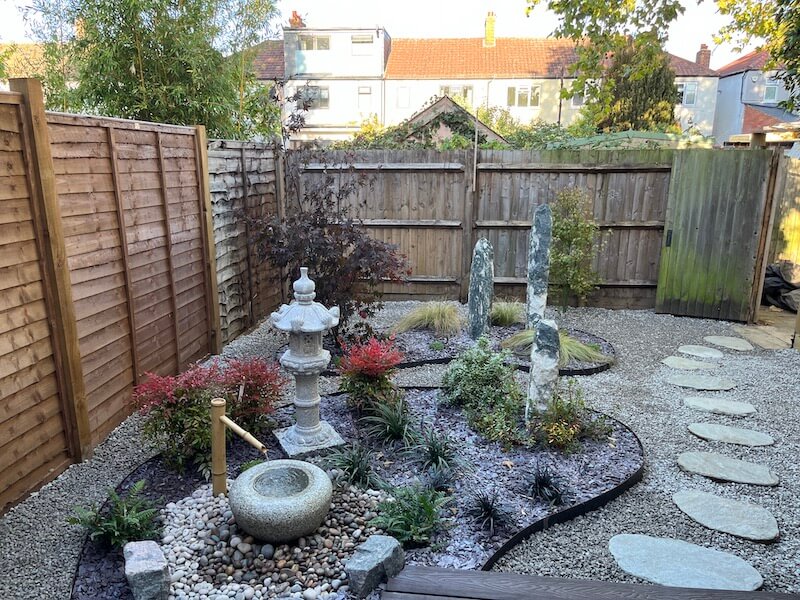
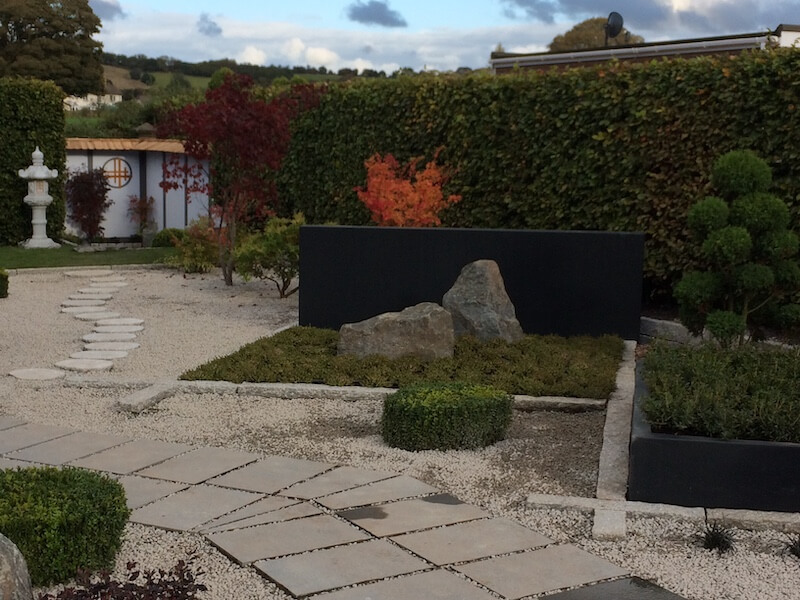
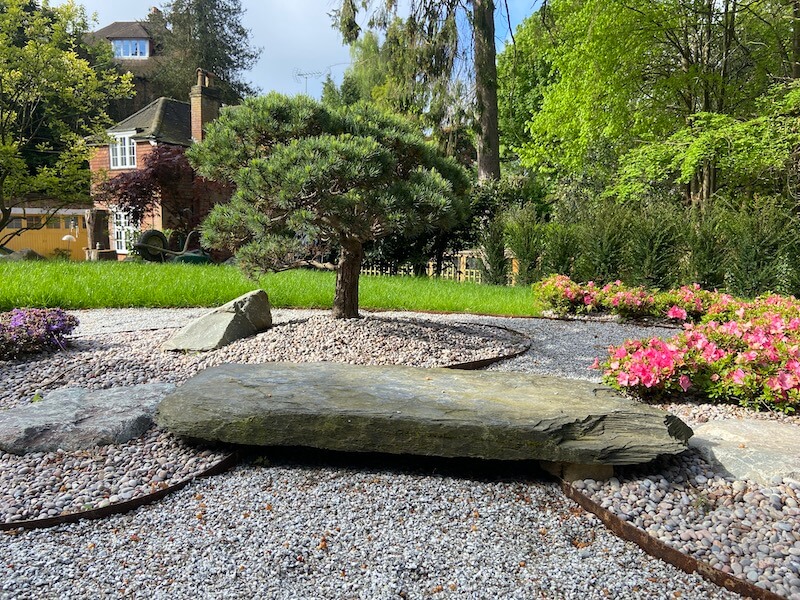
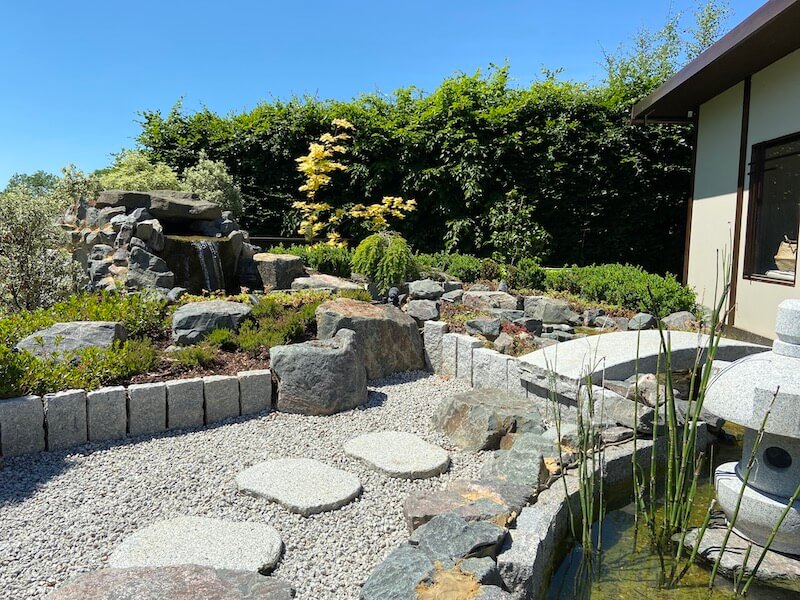
Japanese pathways, often enhanced with stepping stones, come in a variety of sizes, shapes, and materials, including sleek silver-grey granite and natural slate. These versatile stepping stones offer the perfect solution for creating a custom path that complements your unique outdoor space. Whether you’re designing a serene Japanese garden or a tranquil walkway, the flexibility of using individual stepping stones allows for a personalized, harmonious design.
Paving
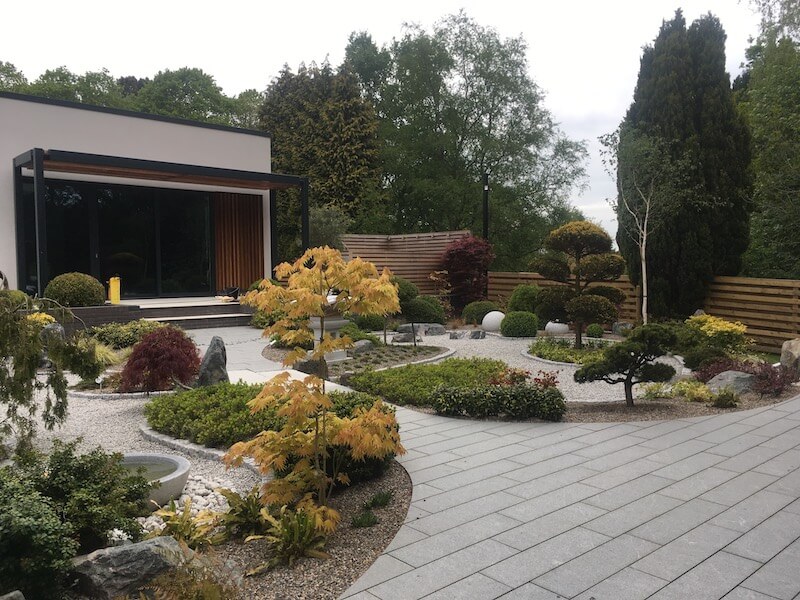
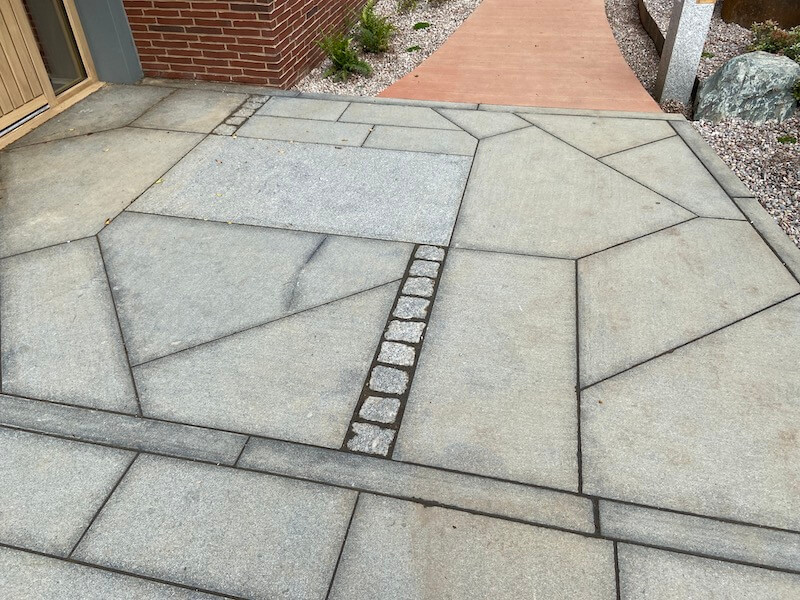
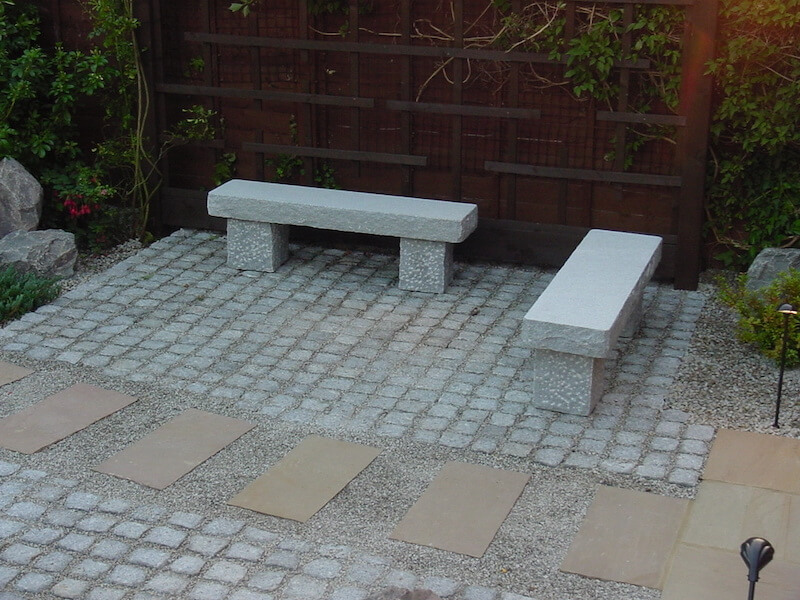
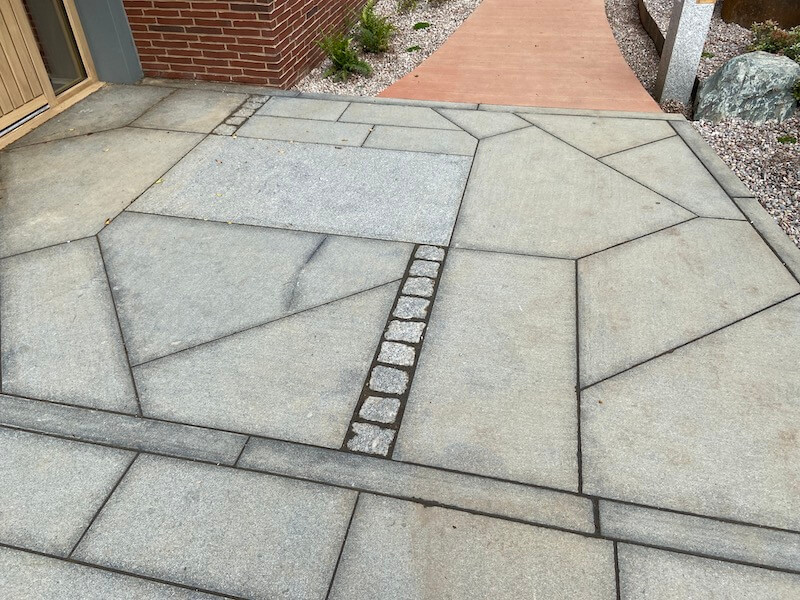
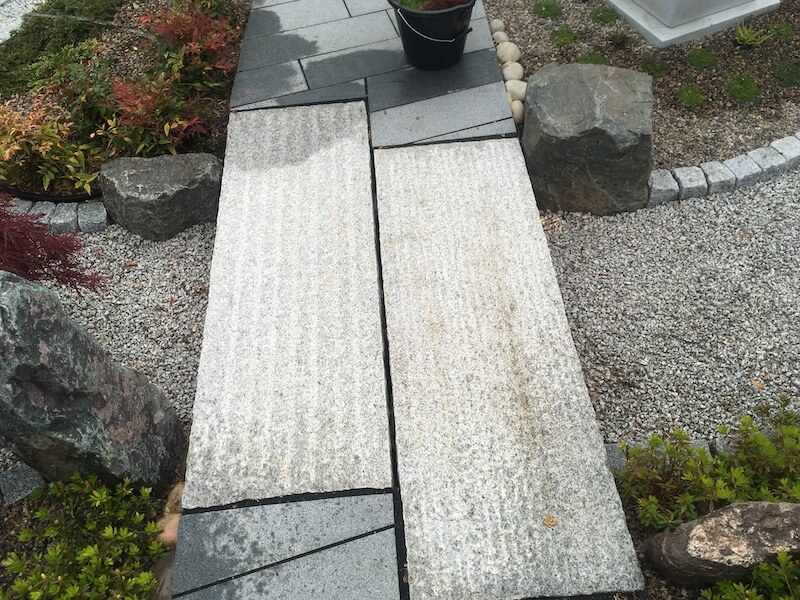
Paving isn’t just ideal for patios, it can also be used to create striking Japanese pathways. Whether you prefer a straight, structured route or a gently meandering, floating-style path, paving offers endless design possibilities. The choice of paving format has a big impact on the final look: using uniform tiles creates a clean, formal Japanese pathway, while mixing different sizes and shapes gives a more relaxed, informal feel. This versatility makes paving a popular and effective material for crafting beautiful, functional garden paths.
Blue-Grey Granite
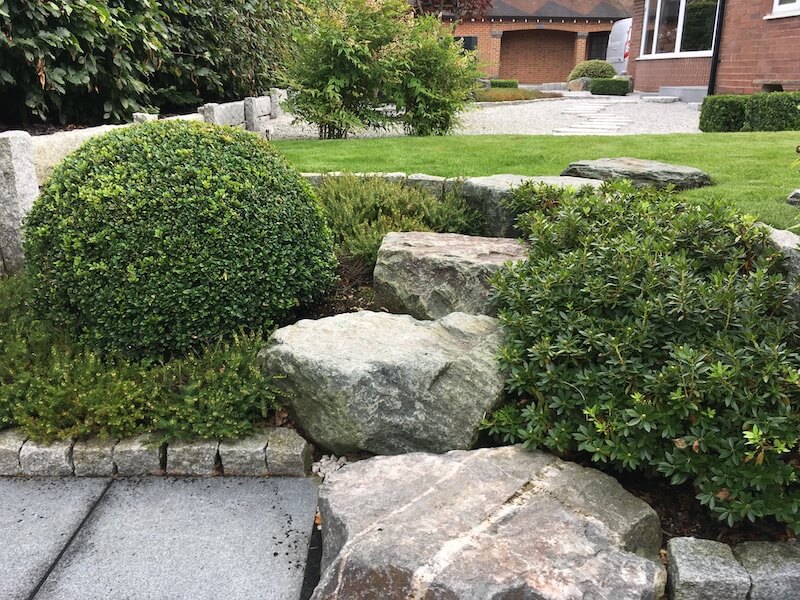
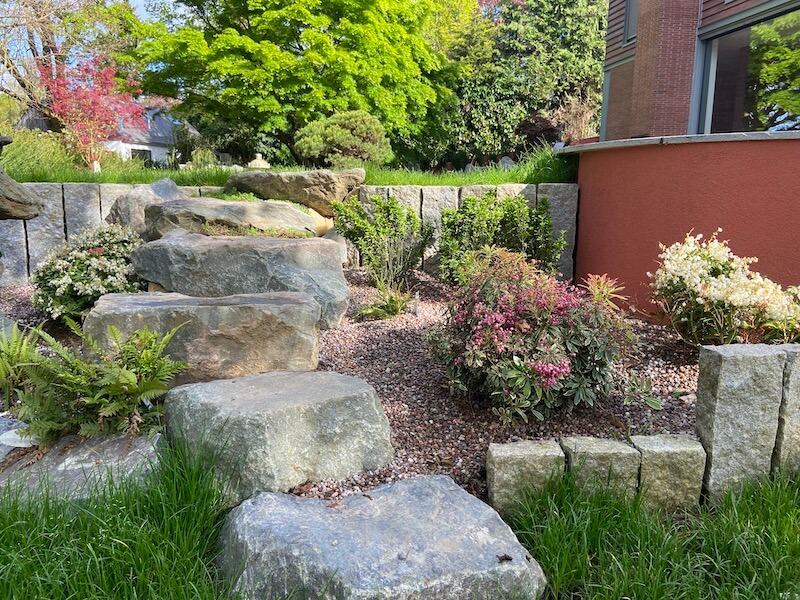
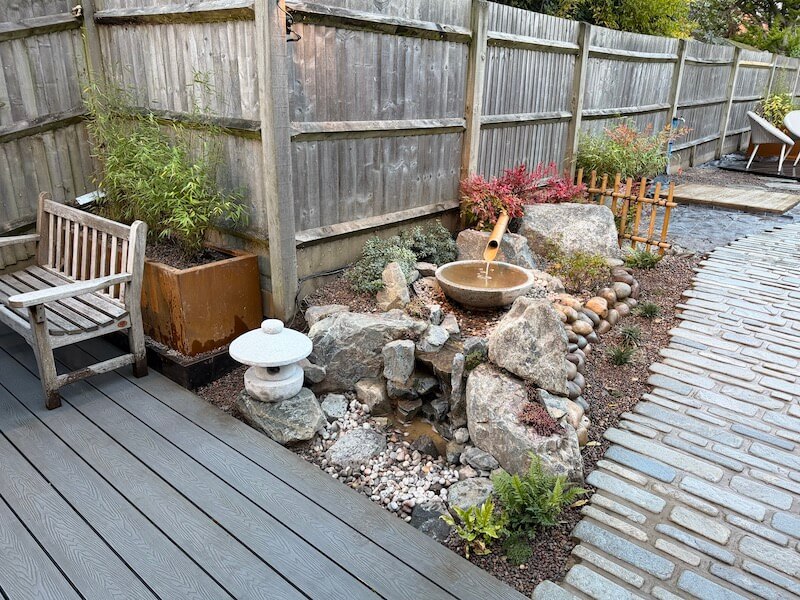
Blue-grey granite rockery stone can be used for a variety of functions within the garden. Its natural colour variations and unique shapes make it an ideal choice for adding character to Japanese pathways and garden designs.
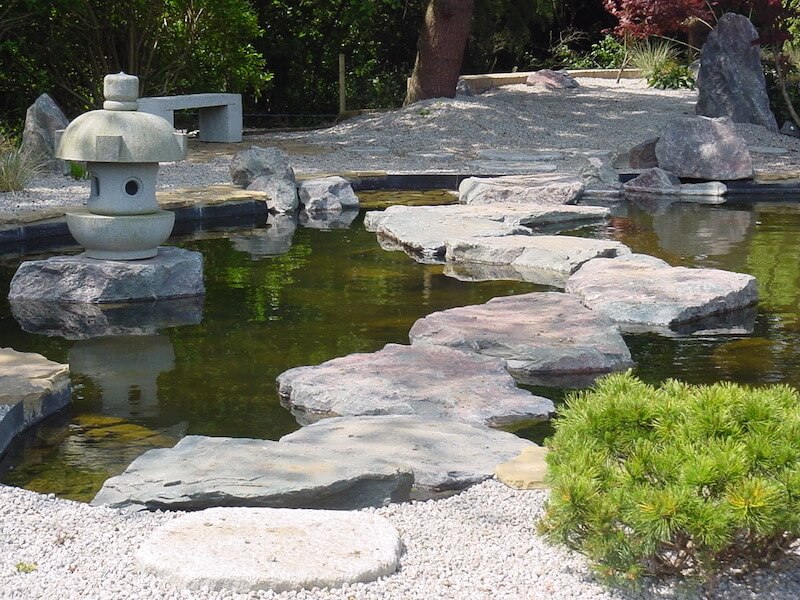
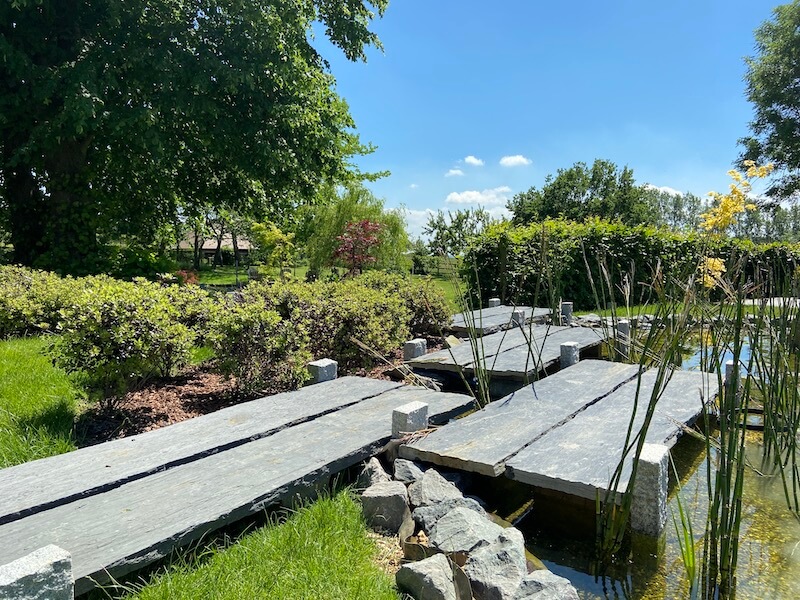
Flatter pieces of blue-grey granite can be used to form striking step features that connect different garden levels with ease. They also work beautifully for creating a Japanese-style pathway across a pond, offering both stability and a visually stunning focal point.


Granite Setts
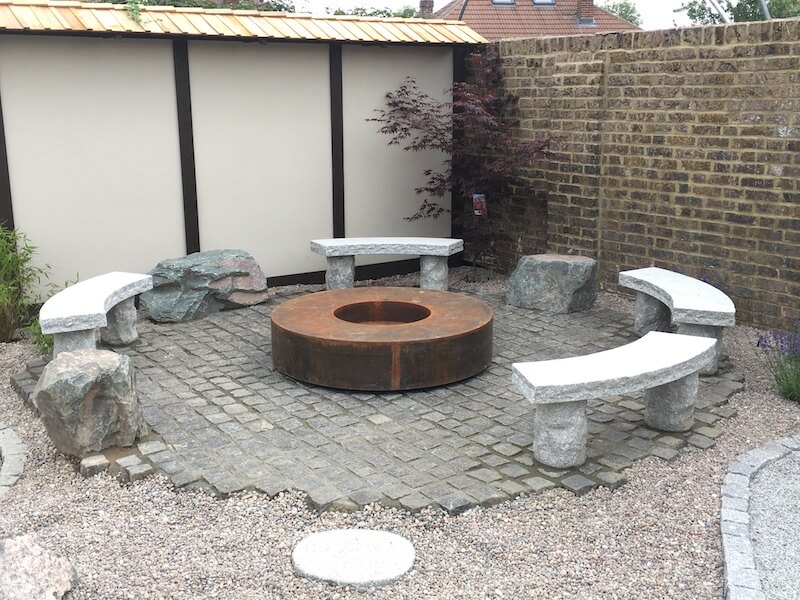
Granite setts are a versatile choice for any Japanese garden, serving not only as edging for Japanese pathways but also as striking design elements in their own right. These durable granite setts can be used alone or incorporated into a larger pathway layout to add texture, detail, and visual interest. Their natural strength and refined appearance make them an ideal material for crafting beautiful, long-lasting Japanese pathways.
Nobedan
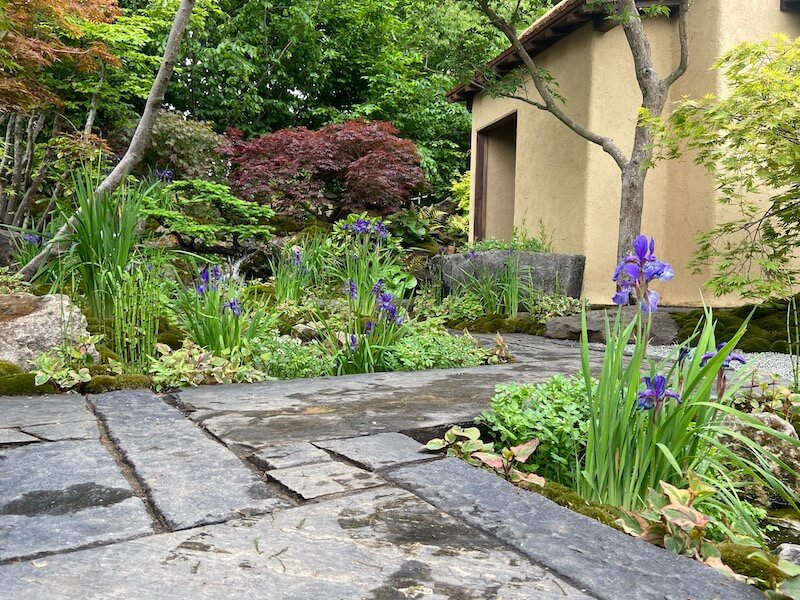
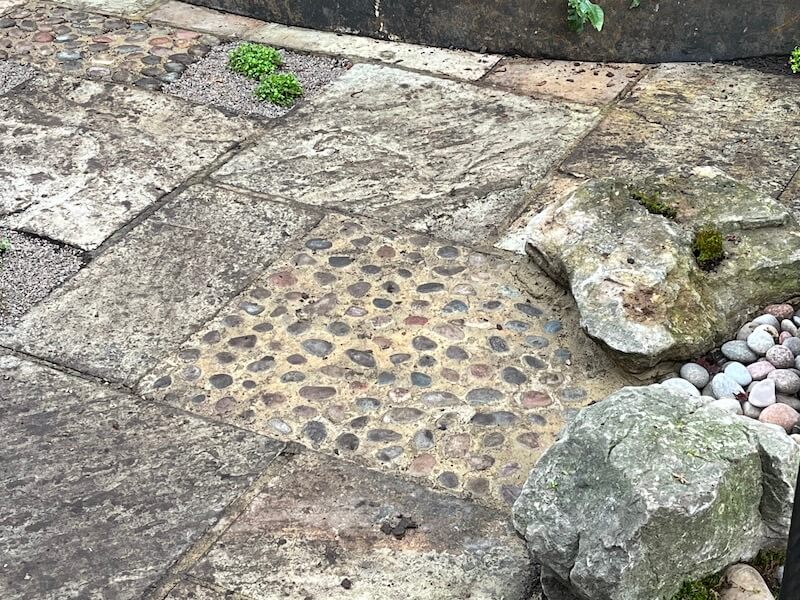
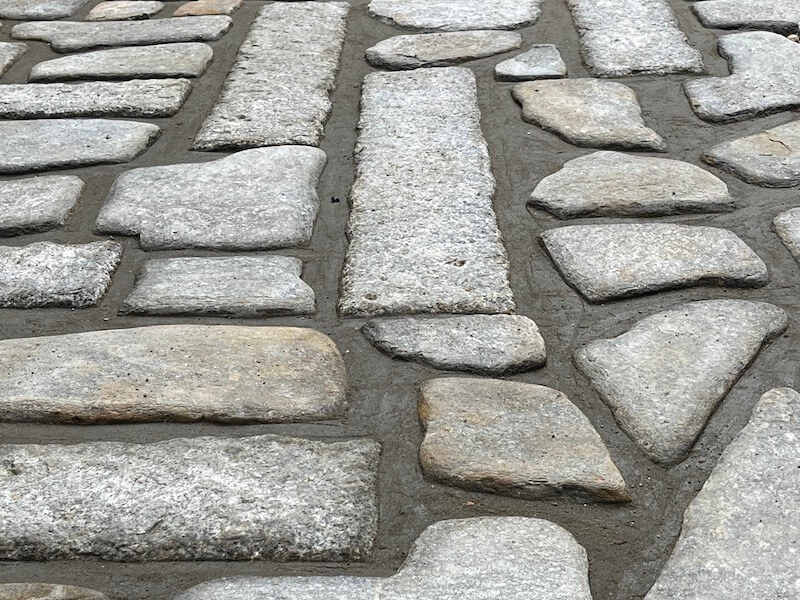
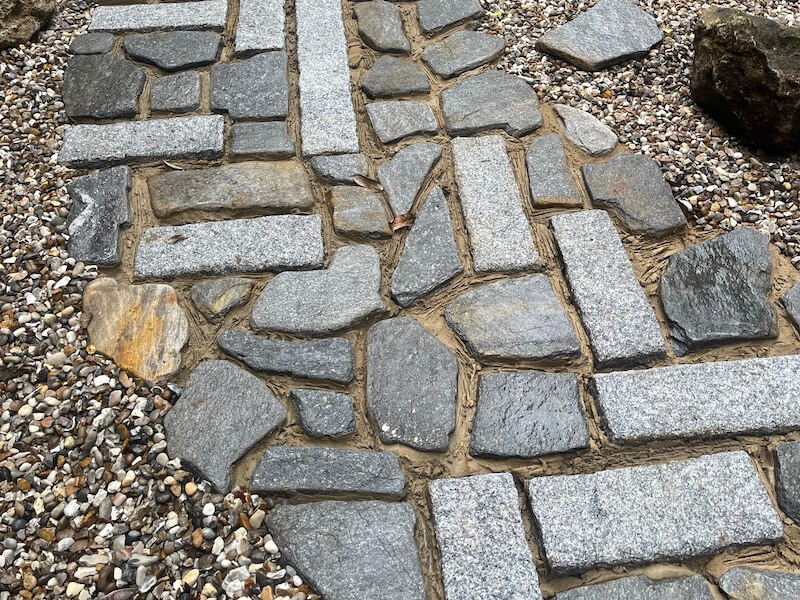
A nobedan pathway is a traditional feature in Japanese gardens, typically created using a blend of different stones, textures, and sizes. These pathways can be arranged in a semi-formal layout or designed more informally with irregular patterns and gentle variations in height. These subtle changes encourage visitors to slow their pace and become more mindful of their surroundings, deepening their connection with nature as they move through the garden.
A wide range of materials can be incorporated into a nobedan pathway, including palisades, setts, cobbles, paving, or naturally shaped rock pieces. We can help advise on the right materials and quantities to achieve an authentic and harmonious nobedan-style pathway.
Bridges
Bridges are an essential feature in a Japanese garden, providing a beautiful and functional way to link two pathways across a pond, stream, or even a dry riverbed. These stone bridges can be designed as flat walkways or graceful arches, depending on the style and atmosphere you want to create. For larger bodies of water, multiple bridges can be arranged in a traditional zig-zag pattern—adding visual interest while reflecting the Japanese belief that evil spirits can only move in straight lines. This design not only enhances the garden’s aesthetic but also enriches the visitor’s experience as they journey through the landscape.
As direct importers we are able to source and supply a large range of high-quality stone products. If there is something specific you would like please get in touch to see what we can offer.